Sensor-Embedded Fabrics Track Micro-Movements in Yoga, Swim Training, and Court Drills
Written by Ben Schmitz · Sep 15, 2026
Sensor-Embedded Fabrics Track Micro-Movements in Yoga, Swim Training, and Court Drills
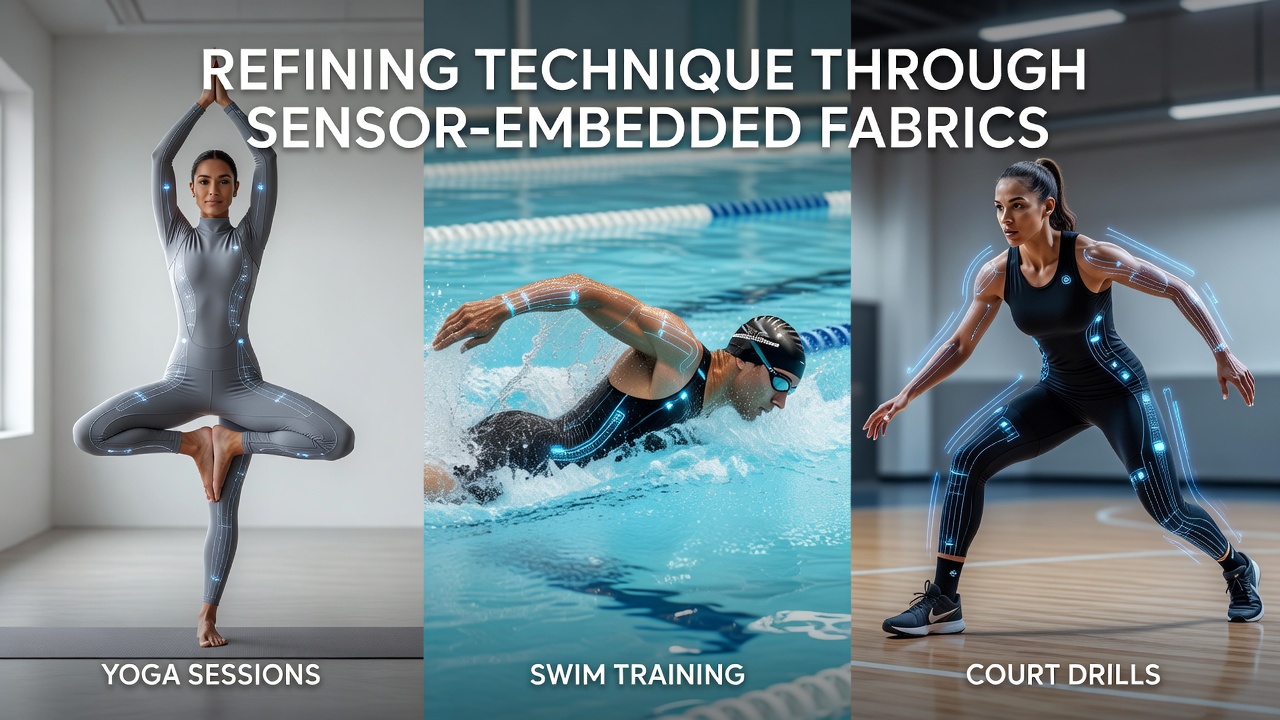
Researchers continue to develop sensor-embedded fabrics that capture micro-movements during yoga sessions, swim training, and court drills while adding no noticeable bulk to the garments themselves. These textiles incorporate flexible conductive threads and miniature accelerometers directly into the weave so athletes receive detailed motion data without extra devices strapped on.
Integration of Sensors in Everyday Athletic Apparel
Textile engineers embed piezoelectric fibers and strain gauges at key joint locations such as hips, shoulders, and knees so the fabric registers even slight deviations in alignment or timing. Because the sensors form part of the yarn structure rather than separate modules, the garments maintain their original drape and stretch properties across repeated wash cycles. Data from these integrated systems travels wirelessly to a connected app or coaching platform where algorithms compare each repetition against established biomechanical benchmarks.
Application Across Yoga Practice
During yoga sequences the fabrics detect subtle shifts in spinal curvature and weight distribution that traditional mirrors or instructor observation sometimes miss. Instructors review heat maps generated from multiple sessions to identify patterns such as uneven hip rotation during warrior poses or inconsistent shoulder stacking in downward dog. Athletes then adjust their form based on the quantitative feedback rather than subjective feel alone.
Performance Insights in Swim Training
Swimwear versions of these fabrics withstand chlorinated water and repeated stretching while still transmitting stroke data. The embedded sensors track hand entry angles, hip roll timing, and kick frequency throughout each lap so coaches can refine technique without interrupting the swimmer mid-set. Because the electronics sit within the fabric layers they produce no drag compared with external wearables and remain comfortable for extended pool sessions.
Use in Court-Based Drills and Agility Work
On tennis and basketball courts the same fabric technology appears in compression shorts, tops, and even integrated into court shoes. The sensors capture lateral cuts, jump landings, and racket or ball contact points so trainers receive millisecond-level breakdowns of movement efficiency. Athletes review session replays that overlay sensor data onto video footage to correct weight transfer or knee alignment issues before they become habitual.
Data Processing and Real-Time Feedback Loops
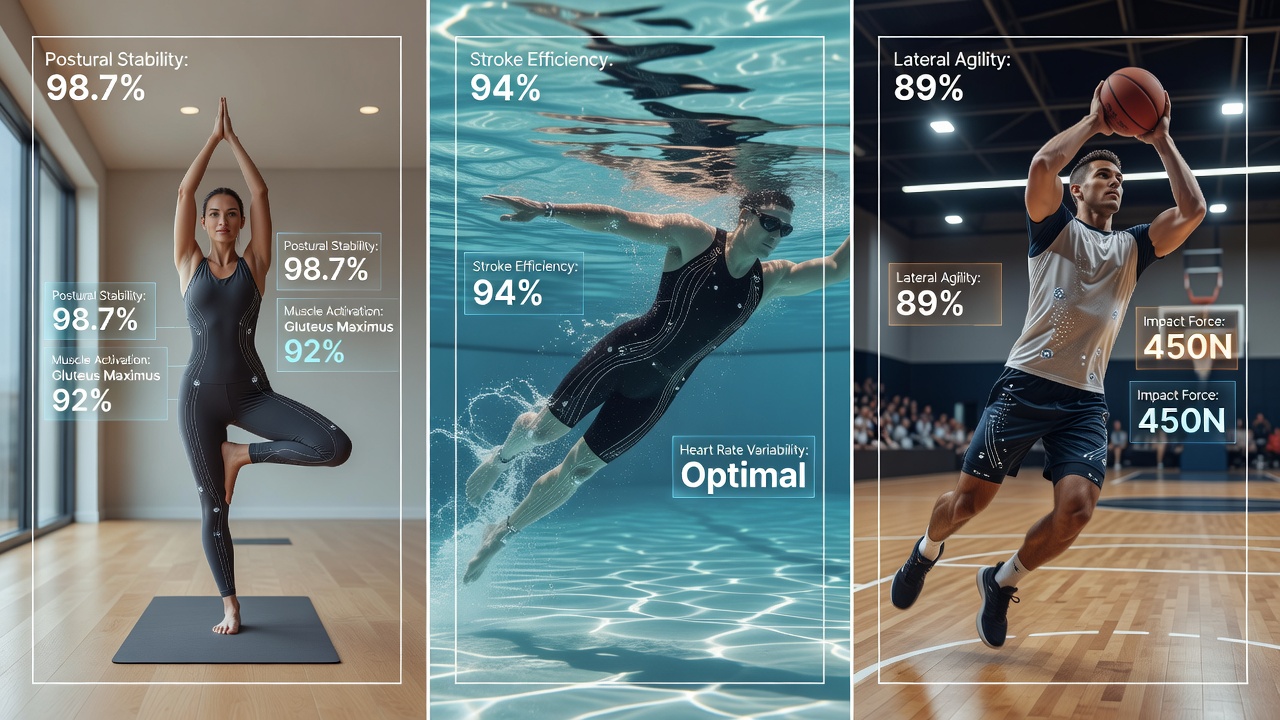
Processing units built into waistbands or seams collect readings at rates up to 200 hertz before transmitting summaries through Bluetooth Low Energy connections. Machine learning models trained on large athlete datasets flag deviations from optimal movement signatures and suggest corrective cues that appear on a nearby screen or audio device. As of September 2026 several professional training centers report routine use of these garments across mixed-discipline programs that combine yoga recovery days with swim endurance blocks and court agility work.
Material Durability and Washability Standards
Manufacturers subject the sensor-integrated textiles to rigorous testing that includes hundreds of wash cycles plus exposure to sweat, chlorine, and ultraviolet light. Conductive pathways remain intact because protective polymer coatings shield the delicate fibers while preserving flexibility. Standards organizations such as those affiliated with the American Society for Testing and Materials have begun drafting guidelines specifically for e-textiles used in athletic environments.
Broader Adoption and Research Developments
University laboratories across multiple continents now publish peer-reviewed studies on the accuracy of these fabrics compared with laboratory-grade motion capture systems. One collaborative project involving institutions in Australia and Canada found strong correlation between fabric sensor outputs and optical tracking during controlled yoga and swim protocols. Industry groups including the Textile World Association track production volumes and note increasing orders from both elite teams and recreational training facilities.
Conclusion
Sensor-embedded fabrics continue to expand their role in technique refinement across yoga, swimming, and court sports by delivering precise micro-movement data without compromising garment comfort or performance. Continued material improvements and standardized testing protocols support wider integration into training routines at every level. Athletes and coaches gain objective metrics that complement traditional observation and accelerate skill development over time.