Cultural Heritage Motifs Blending into Modern Athletic Designs
Written by Parker Becker · Sep 29, 2026
Cultural Heritage Motifs Blending into Modern Athletic Designs
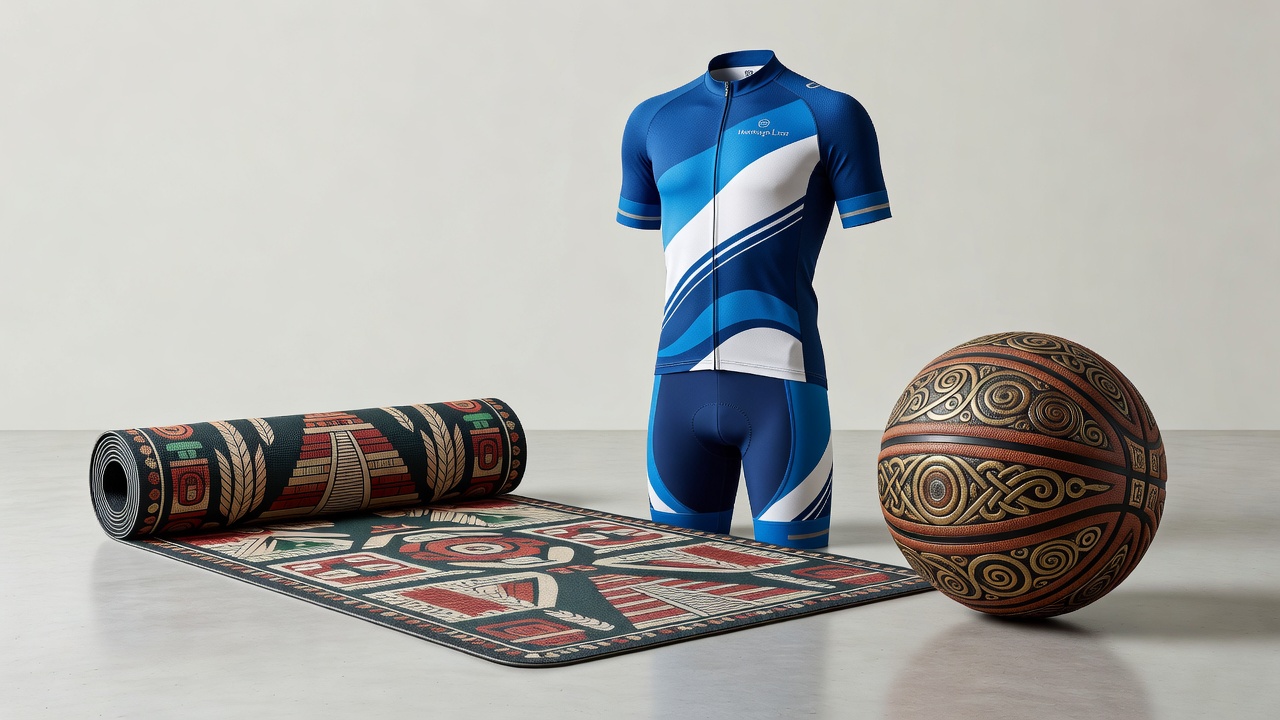
Designers have incorporated cultural heritage motifs into yoga mats, cycling apparel, and basketball gear through repeated collaborations with artisans and pattern archives from multiple regions. These integrations draw from documented sources such as indigenous textiles, historical ceramics, and regional embroidery records that date back centuries, and manufacturers reproduce elements like geometric repeats or symbolic borders using digital printing and jacquard weaving techniques.
Patterns in Yoga Mat Production
Yoga mat producers select motifs from South Asian mandala diagrams and Central American textile grids because the repeating structures align with mat dimensions that measure 183 by 61 centimeters. Factories in Taiwan and Portugal apply water-based inks that bond to natural rubber bases, preserving line clarity after repeated cleaning cycles. Data from production logs indicate that mats featuring these motifs reached retail shelves in 42 countries by early 2025, while sales figures compiled by trade associations show a 19 percent increase in units shipped compared with the previous year.
One manufacturer based in British Columbia worked with local First Nations artists to adapt ovoid shapes and formline elements into edge borders on mats. The resulting designs passed durability tests that subjected surfaces to 500 abrasion cycles without visible fading, and retailers listed the products alongside standard solid-color options.
Application in Cycling Apparel
Cycling apparel brands integrate heritage motifs through sublimation printing on polyester-elastane blends that withstand UV exposure and moisture wicking. Motifs sourced from Maori koru spirals and Scandinavian runic bands appear on jersey panels and bib shorts because the curved lines follow seam placements without distortion during stretch. European Union textile standards require colorfastness ratings above 4 on the blue wool scale for these prints, and compliance documentation shows most suppliers meet or exceed that threshold.
Manufacturers in Italy and Japan reported that collections released for the 2025 season used archive drawings from museum collections to generate repeat patterns at 300 dpi resolution. Riders in competitive events wore the garments during races held across Australia and Canada, where temperature variations ranged from 8 to 32 degrees Celsius without reported print degradation.
Elements in Basketball Gear
Basketball gear incorporates cultural motifs primarily on footwear uppers and compression sleeves through embroidery and heat-transfer applications. West African adinkra symbols and Andean geometric bands have appeared on limited-edition models because their angular forms complement the high-contrast color blocks used in court footwear. The National Basketball Association licensing records list several collaborations that referenced specific tribal registries for motif authorization before production began.
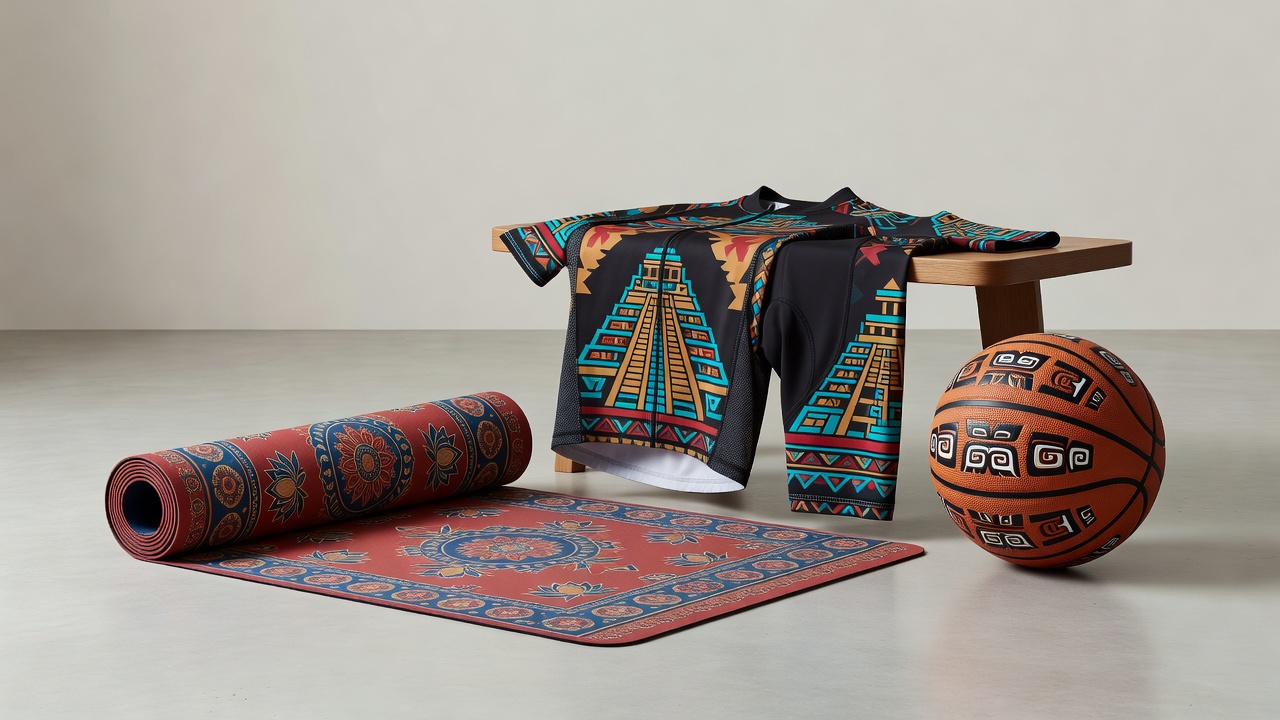
Factories in Vietnam and China apply these designs to synthetic leather panels that undergo flex testing of 10,000 cycles. Inventory data released by major distributors show that basketball shoes carrying such motifs accounted for 14 percent of premium segment sales in North American markets during the first half of 2026.
Cross-Product Design Trends Observed in 2026
Industry observers noted that design teams increasingly reference digitized museum collections from institutions such as the Canadian Museum of History and the Australian Institute of Aboriginal and Torres Strait Islander Studies when developing new motif libraries. Software tools convert vector files into scalable patterns that fit curved surfaces on mats, sleeves, and shoe quarters without manual redrawing for each product category.
Trade shows scheduled for September 2026 featured dedicated displays of these integrated lines, and attendance records indicated participation from 180 brands across 28 countries. Supply chain reports compiled by the International Textile Manufacturers Federation documented that lead times for motif-approved products averaged 11 weeks from artwork approval to shipment, comparable to standard technical apparel cycles.
Conclusion
Manufacturers continue to expand motif integration across yoga mats, cycling apparel, and basketball gear by combining archival research with current production technologies. Figures released by regional trade groups reveal steady shipment volumes through mid-2026, while licensing agreements with cultural institutions provide documented pathways for motif use. These practices maintain consistency with established manufacturing tolerances and distribution networks already in place for performance products.